
RECOMMENDED READING
[Thanks to Heather Martin (Maine Dept. of Ed.) for many of these articles; Emphasis = added in the pull quotes! ~ m]
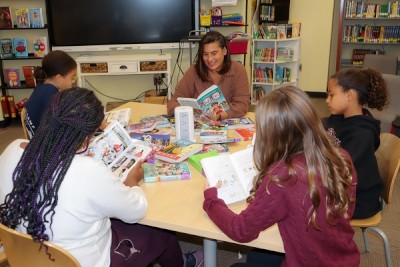
- “The Allure of Graphic Novels” / Dina ElBoghdady
- “Scott McCloud, a cartoonist best known for his seminal book Understanding Comics, built on McLuhan’s work by asserting that the heavy lift for readers takes place in the empty spaces, or “gutters,” between panels…”
- “Emotions are conveyed between or within panels of images as well, drawing from the parts of the brain involved in behavioral and emotional responses…”
- ” ‘The potency of the picture is not a matter of modern theory but of anciently established truth,’ William Moulton Marston, a Harvard-trained psychologist and creator of Wonder Woman wrote. ‘Before man thought in words, he felt in pictures.’
- [EXTRA CREDIT: Jill Lepore’s Secret History of Wonder Woman >>]
- ⭐“The Benefits of Graphic Novels: Why They Count as Reading” / United Through Reading
- Cognitive and Literacy Development
- Cultural and Emotional Engagement
- Educational Value
- Encouraging Creativity
- “3 Ways Graphic Novels Benefit Kids” / Scholastic
- “Harvard Thinking: What’s Driving decline in US literacy rates?” / Harvard Review (4 Sep. 2025)
- “The thing about phonics is that it is a means to an end. It is not an end in and of itself. It’s a means to unlocking words, unlocking sentences, unlocking meaning, and to really just focus on the phonics without having some continuous text that is meaningful is not necessarily going to come with the results that we want in terms of children who can read and who want to read.”
- “Reading comprehension requires the coordination of many skills. Coordinating your ability to read words off the page with your understanding of the meanings of words. Also, it really relies on your background knowledge. It’s very difficult to understand a text if you don’t have significant background knowledge…”
- “Navigating Literacy Challenges: Fostering a Love of Reading” / Harvard Grad. School of Ed.
- “[READING COMICS MEANS] involving a lot more parts of your brain, because the words are fewer than if it were in a text, but you’re seeing visual images, you’re seeing expressions. So you know how the characters are feeling, rather than being told how they’re feeling, and so it is a multiple literacy… So there’s a lot of literacies going on with graphic novels, and I have to say that I’m still developing some of those literacies, because I’m a linear reader… But again, some of our learners… They’re very comfortable with that, and it’s interesting to hear them talk about how they navigate that presentation of text and multiliteracies.”
- “The Research Behind Graphic Novels and Young Learners” / Northwestern.edu
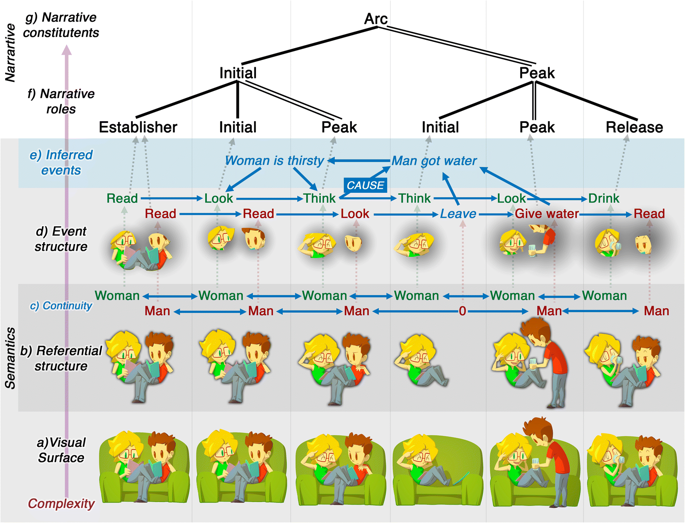
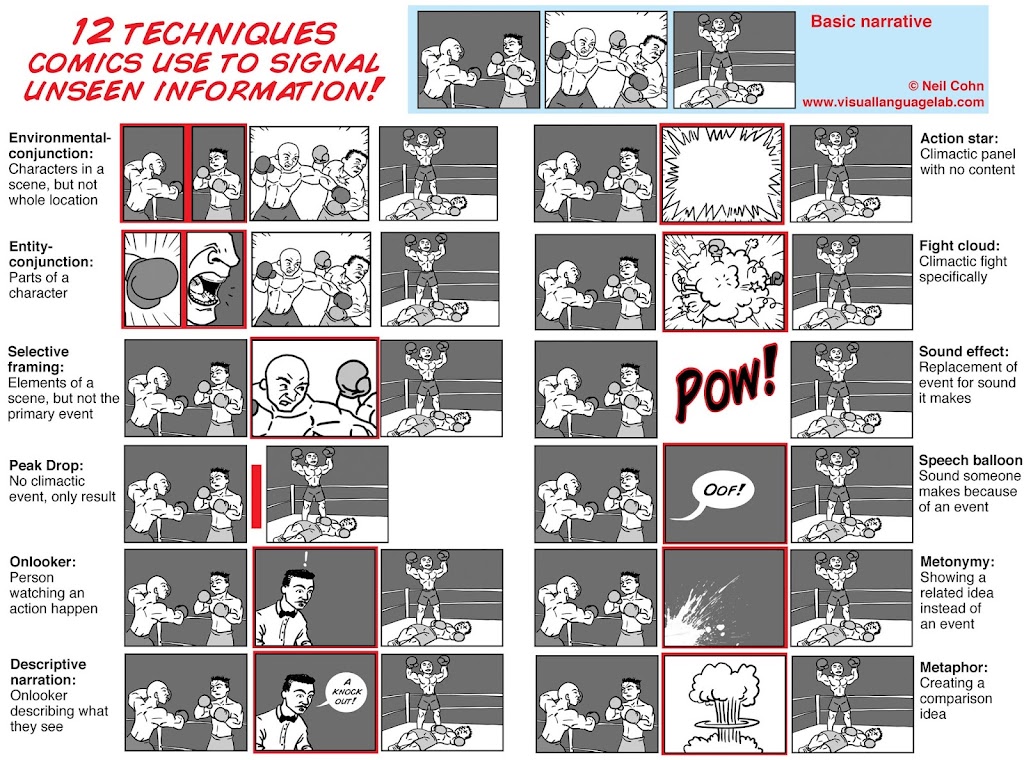
- “With graphic novels, students use text and images to make inferences and synthesize information, both of which are abstract and challenging skills for readers. Images, just like text, can be interpreted in many different ways, and can bring nuances to the meaning of the story…”
- “Comic Books as Models for Literacy Instruction” / Literacy Now — “When reading a comic book, students must read between the lines. This is a wonderful manner in which to teach students to draw inferences and synthesize information…”
- Visual Language Lab: Research Papers >>
= “downloadable academic papers on visual language research”
- “With graphic novels, students use text and images to make inferences and synthesize information, both of which are abstract and challenging skills for readers. Images, just like text, can be interpreted in many different ways, and can bring nuances to the meaning of the story…”
- “Literacy and the Graphic Novel.” / EBSCO (2024)
- “Using Comics and Graphic Novels to Support Literacy.” / Edutopia (Sep. 2022)
- “Don’t Underestimate the Power of Graphic Novels for the Classroom.” / Education Week (April 2025)
“Comics in Education” by Gene Yang
= “The online version of the final project proposal for [Yang’s] Masters of Education degree.” (Includes historical overview & bibliography.)

Comics Censorship
Resources for COMICS CENSORSHIP in various eras & societies…
- History of Comics Censorship (Parts 1-6) / CBLDF
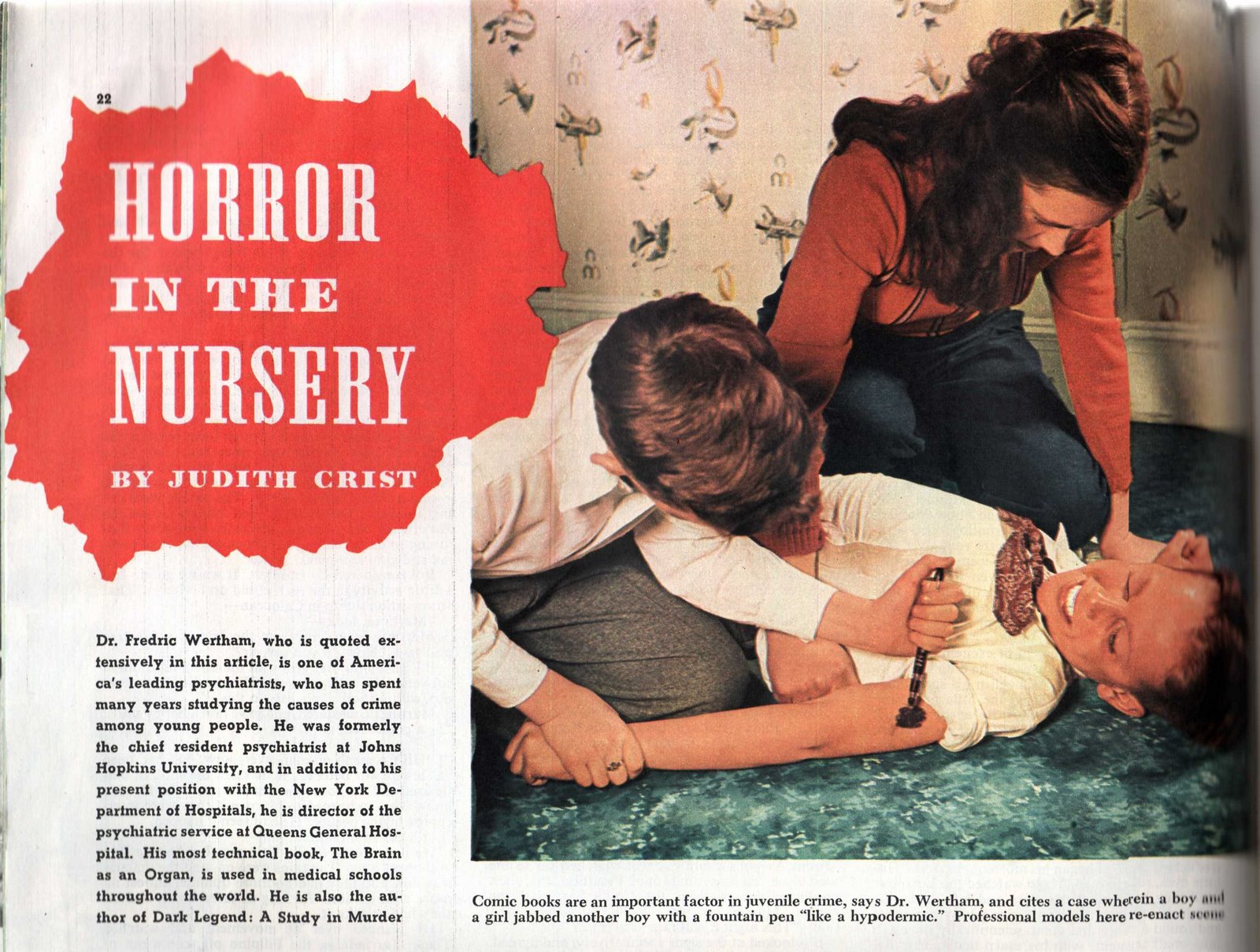
- 👇Primary source articles demonstrating negative views of comics in 1940s-1950s US mass media:
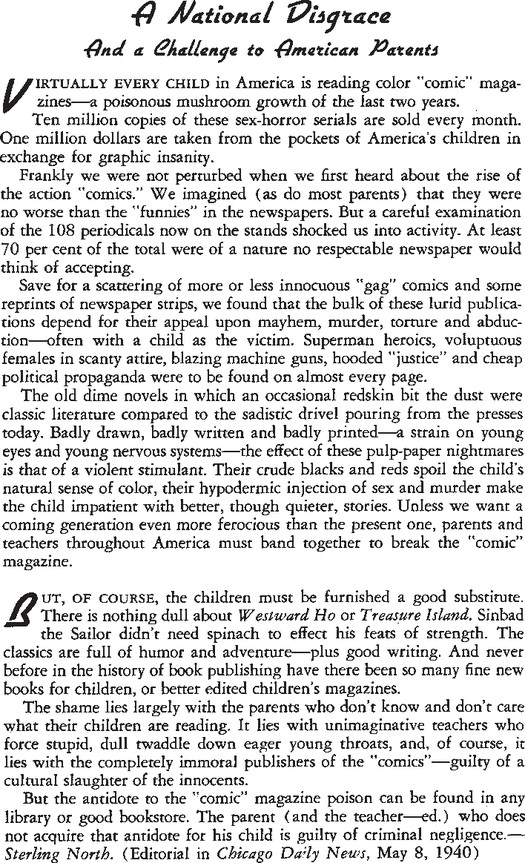
“A National Disgrace / And a Challenge to American Parents” (Sterling North, Chicago Daily News, 8 May 1940)
“Virtually every child in America is reading color “comic” magazines — a poisonous mushroom growth of the last two years. Ten million copies of these sex-horror serials are sold every month. One million dollars are taken from the pockets of America’s children in exchange for graphic insanity…”


Recommended Reading
A VERY BASIC list of graphic novels & comics (& related resources) I use in my teaching…
